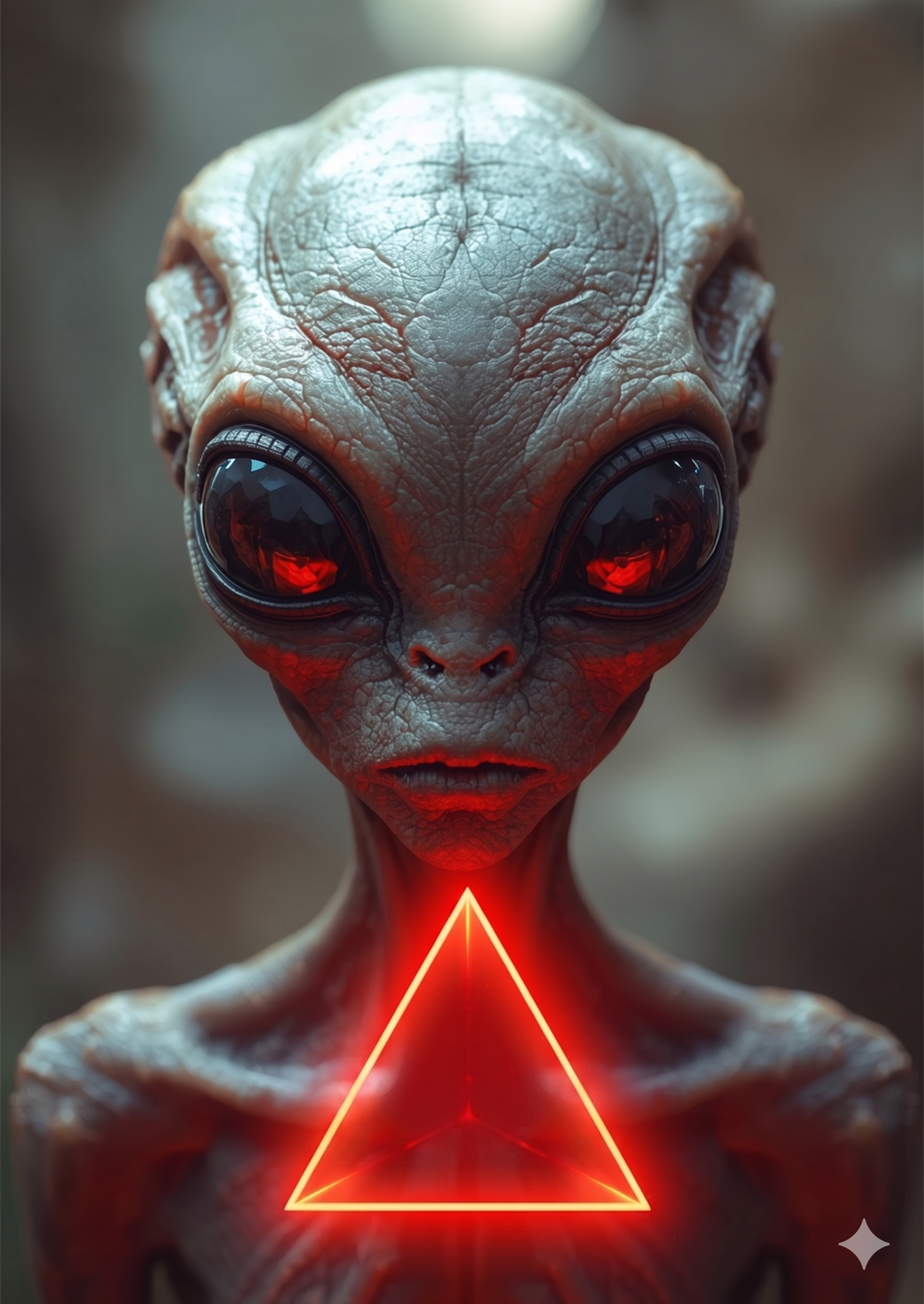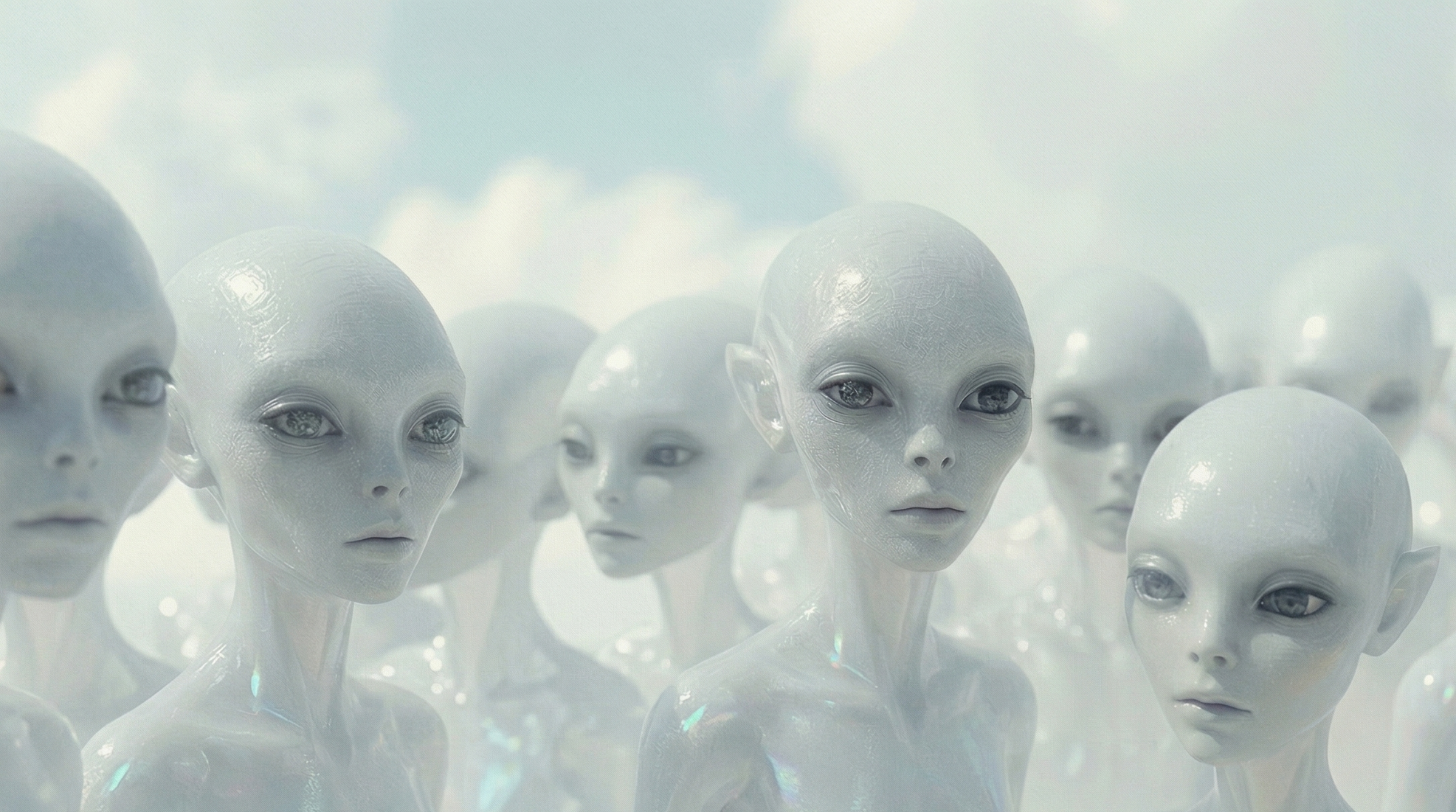

Antareans
Youngs, Adults, Queens
Young Antareans
Young Antareans can be recognized by their small antennae and the horn in the middle of their forehead. Their appearance often recalls large green insects, somewhat similar to mantises. Their skin carries copper reflections and vivid green tones, more delicate and fragile compared to the deeper shades of adulthood.
Proud and competitive, the young often form teams to channel this instinct into playful rivalry. From an early age they are left free and independent: their teacher is not an adult Antarean, but nature itself. Trees, soil, insects, and wind constantly communicate with them, shaping their education through resonance rather than direct instruction.
Their antennae are a vital instrument: through them they learn to tune into the rhythms of the natural world. This sensitivity ensures their survival and future growth, though their nature is far less stable than that of humans. Surrounded by natural enemies, they must align perfectly with the present moment, learning to trust nature to provide the right information at the right time.
As they grow, initiations await them in the solitude of the Antarean forests. In those long silences, their antennae vibrate with the codes of life: the whispers of the trees, the signals of the insects, the subtle dance of wind and soil. Unlike us, they do not learn through linear teachings but through resonance — the forest itself is their guide, the insects mark their steps, the trees reveal their hidden wisdom.
Yet, young Antareans cannot communicate with nature over long distances — a gift reserved for adulthood. Only the rarest among them, those who tame their pride and fully surrender to the embrace of nature, may one day be chosen to ascend into the hive-mind of the Queens.
Adult Antareans
When Antareans reach adulthood, their bodies undergo a profound transformation. The vivid green and copper tones of youth deepen into shades of emerald, turquoise, and obsidian, giving their skin density and resilience. Their semi-organic exoskeleton thickens into a living armor, etched with patterns that mirror their intimate bond with nature.
The most striking change is in their head structure: the horn of youth splits and disappears, reshaping the skull into an elongated form. Their antennae grow outward like organic receivers, finely tuned to perceive distant frequencies. This shift mirrors their consciousness — no longer bound to their immediate environment, they can now sense and communicate across vast distances.
Antareans are above all a warrior species. The harsh trials of their youth shape them into natural fighters with immense willpower. They do not fear easily and would rather die than surrender freedom or independence. After their solitary initiations, adults return to tribal communities where they live as one organism, resonating with the Queen’s frequency. This is not control, but resonance: a shared consciousness that allows each Antarean to know their role and purpose with clarity.
Unlike humans, often uncertain of destiny, Antareans live with a clear alignment. Their service to the Queen is not submission but harmony — akin to serving the Divine. Every Antarean aspires to one day become a Queen, though many incarnations may pass before reaching such a stage.
The Queen embodies their highest inspiration: universal consciousness manifested as wisdom, power, and protection for the tribe. Because of their strength, resilience, and unbreakable unity, Antareans are often recruited by the Galactic Confederation in times of war. In battle, they fight not only with weapons, but with the indomitable force of a collective mind, guided by consciousness itself.
Antarean Queens
Antarean Queens are distinguished by their unique head structure: the two antennae of youth expand into immense, powerful forms resembling great horns. This transformation occurs when the elongated back of their head opens “like a flower,” releasing organic filaments that appear to us as flowing hair.
Queens are exceedingly rare, for the path to becoming one is almost impossible. In their youth, they are often the fiercest, most fearless, and paradoxically the hardest to attune to the collective field. Their rebellious spirit frequently leads them into danger, and many perish before reaching maturity. Yet those who survive become extraordinary warriors, forged by hardship and tempered through the loss of kin, the transcendence of anger, and the resilience to rise again after each defeat.
When an elder Queen selects a successor, the chosen one enters a long and demanding apprenticeship. She must first master the forces of nature, then learn to command herself — ensuring that her immense powers are never used recklessly, but only when the survival of the species requires it. A Queen can merge with the environment itself, holding the elemental powers within her very being.
Her highest duty is to transmit the divine frequency of Antarean consciousness. To do this, she must remain in perfect alignment, for a fall into ego — conquest, domination, or selfish desire — would corrupt the entire tribe. A fallen Queen becomes one of the most dangerous forces in existence, her misaligned frequency capable of devastating worlds. For this reason, the initiations of a Queen are among the most severe and demanding in the Antarean path.
The Queen is a solitary and overwhelming presence. To stand before her unprepared is almost unbearable, for she radiates immense energy that can cause outsiders to faint. Within the tribe, males exist but are smaller and more fragile, and though a male may rarely rise to kingship, such cases remain exceptional.
The power of the Queens is both revered and feared. Perhaps this is why, in human symbology, horns are often associated with the devil: not because they represent evil in themselves, but because they signify the danger of losing control over primal instincts.
A Queen embodies both the highest potential of her species and its greatest risk — an eternal reminder of the delicate balance between creation and destruction.